 Pin this
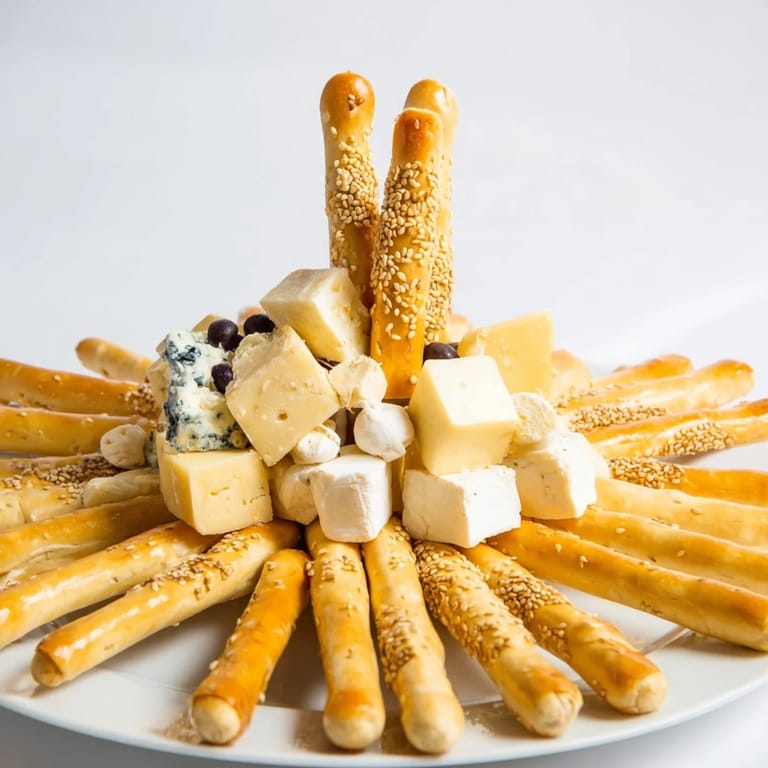
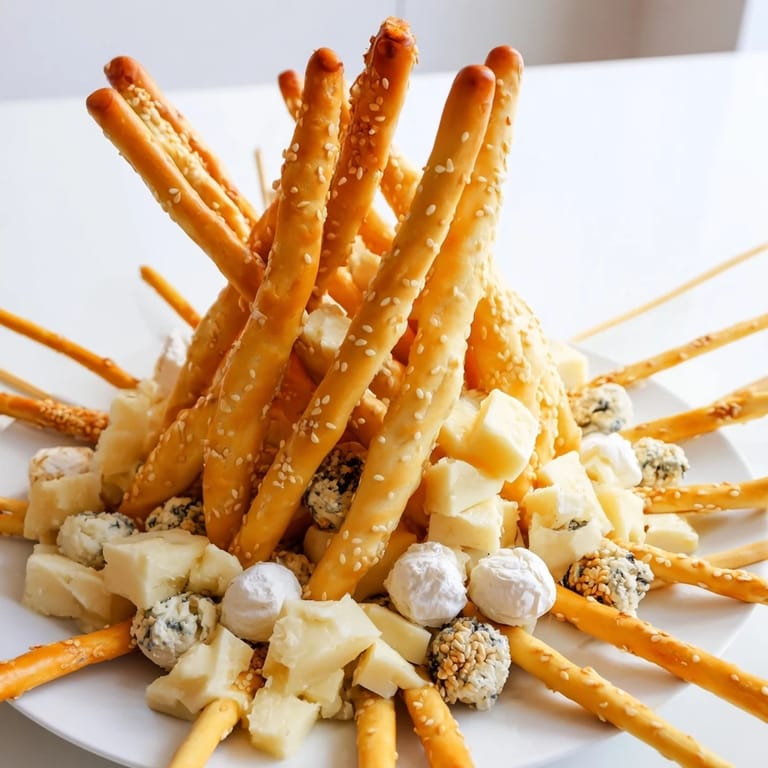
 I discovered this dish while watching a chef carefully construct an edible sculpture at a dinner party, and I became immediately fascinated by the audacity of it all—a dome of golden breadsticks holding court over a treasure trove of cheeses. There was something magical about the engineering of it, the way each stick leaned against its neighbor like they were conspiring together. That evening, I went home determined to recreate that moment, not just the flavors but the theatrical gesture of it, the way guests would lean in and smile before breaking it apart.
The first time I made this for friends, my hands were shaking as I began stacking the breadsticks into a dome—I'd practiced with chopsticks the night before, which probably wasn't the most sensible preparation method. But when it held, when that last breadstick clicked into place and the whole structure stood proud on the platter, I felt the same rush I imagine architects feel. My friend Sarah's face when she walked into the room made every minute of kneading and cooling worth it.
Ingredients
- All-purpose flour: The foundation of your breadsticks—I learned the hard way that measuring by weight gives you far more consistent results than cups ever will.
- Instant dry yeast: Don't skip the yeast, and don't use expired packets; this is where the lift and tender crumb come from.
- Sugar and salt: The sugar feeds the yeast while a touch of salt brings out the subtle wheat flavor and keeps everything balanced.
- Lukewarm water: Too hot kills the yeast, too cold and nothing happens—aim for the temperature of bathwater on your wrist.
- Olive oil: This enriches the dough and creates that golden exterior when baked.
- Egg yolk glaze: A simple brush of this creates that restaurant-quality shine and helps the sesame seeds cling.
- Triple-cream Brie: This is your luxe anchor cheese, soft and buttery with an almost impossible creaminess.
- Aged Comté: Nutty and complex, it grounds the plate with sophistication and a hint of caramel notes.
- Truffled goat cheese: The showstopper—small balls look elegant and the truffle earthiness elevates everything around it.
- Blue cheese: A bold choice that adds pungency and reminds everyone this isn't a timid cheese board.
- Parmigiano Reggiano shavings: Use a vegetable peeler to create delicate shards that catch the light.
- Red grapes: These provide brightness, acidity, and a little textural surprise among the creamy cheeses.
- Honey or fig jam: A drizzle of something sweet-sticky bridges all the savory complexity beautifully.
Tired of Takeout? 🥡
Get 10 meals you can make faster than delivery arrives. Seriously.
One email. No spam. Unsubscribe anytime.
Instructions
- Mix your dough foundation:
- In a large bowl, whisk together the flour, yeast, sugar, and salt—this distributes the yeast evenly so you don't get pockets of unevenness. Pour in the lukewarm water and olive oil, stirring until shaggy bits come together into a rough dough.
- Knead with intention:
- Knead for 8 to 10 minutes until the dough becomes smooth, elastic, and slightly tacky but no longer sticky—you'll know it's right when it springs back gently when you poke it. This develops the gluten, which gives your breadsticks their delicate structure.
- First rise:
- Cover the bowl with a damp cloth and let it sit in a warm spot for about 30 minutes until visibly puffy and roughly doubled in volume. I often use my turned-off oven with the light on.
- Heat and prepare:
- Preheat your oven to 200°C (390°F) and line a baking tray with parchment paper so your breadsticks don't stick and brown unevenly.
- Shape with precision:
- Divide the dough into 18 to 20 small pieces and roll each into a thin stick about 3 mm thick and roughly 25 cm long—consistency here matters because uneven sticks won't stack evenly. A light dusting of flour on your work surface helps prevent sticking.
- Glaze and garnish:
- Place the breadsticks on your prepared tray and brush each one lightly with beaten egg yolk, then sprinkle with sesame seeds if using—the brush strokes should be gentle so you don't deflate them.
- Bake until golden:
- Bake for 15 to 18 minutes, turning the tray and flipping the sticks halfway through so they brown evenly on both sides. They should be crisp and golden, not pale or too dark.
- Cool completely:
- Let them cool entirely on the tray before moving them—they'll continue crisping as they cool and handling them warm risks breaking them.
- Assemble your masterpiece:
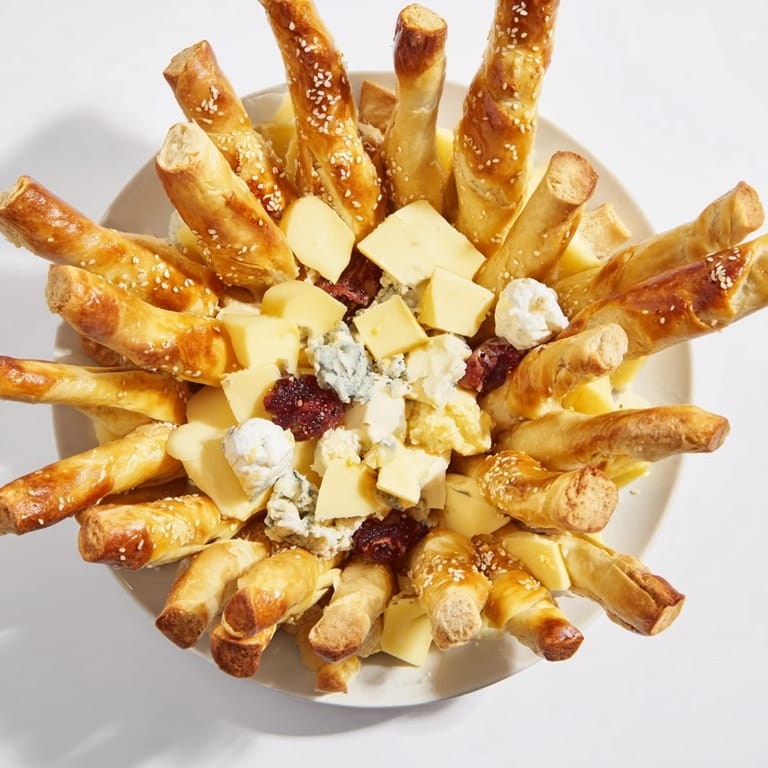
- Arrange the cheeses in a generous mound on your serving platter, interspersing grapes throughout, then scatter shavings of Parmigiano over top. Drizzle with honey or fig jam and scatter fresh herbs around the base.
- Build the dome:
- Carefully lean breadsticks against each other over the cheese, working in a circular pattern from the bottom up—think of it like building a teepee, each stick supporting its neighbors. If you're nervous, use a small bowl as a temporary base guide and slide it out once the structure holds itself.
 Pin this
 There's a quiet moment, right after you finish assembling this, where you step back and just look at it—this golden cage you've built with your own hands. It feels ceremonial in a way most food doesn't, less like dinner prep and more like creating something that will be remembered.
The Cheese Selection Matters
I used to think all cheeses belonged together on a board, but this dish taught me that thoughtful pairing is an art form. The triple-cream Brie provides softness and approachability, while the blue cheese ensures there's a moment of bold complexity when someone bites into it. The aged Comté adds a subtle sweetness that makes everything feel harmonious, and the truffled goat cheese reminds everyone that this is a special occasion. The key is balance—you want variety in texture and intensity so every bite feels like discovery, not monotony.
Timing and Temperature
I've learned that this dish is less about rushing and more about respecting each stage of the process. The dough needs its full rise time to develop flavor and structure—cutting corners here results in dense, disappointing breadsticks. Similarly, pulling them from the oven at the exact moment they achieve that deep golden color but before they become brittle is the difference between elegance and disaster. Letting them cool completely ensures they're crisp enough to handle without shattering but flexible enough to lean against each other without cracking.
Variations and Personal Touches
The beauty of this dish lies in its flexibility—it's a framework for your cheese preferences and seasonal inspirations. One autumn, I added roasted grapes and a swirl of walnut paste into the cheese mound, transforming the whole thing into something deeper and more autumnal. Another time, I rolled the breadsticks in everything bagel seasoning instead of sesame seeds, and it brought an unexpected savory punch. The scaffolding stays the same, but the contents can shift with your mood or what's excellent at the market that week.
- Try substituting some breadsticks with herb-infused versions by adding dried oregano, thyme, or rosemary to the dough.
- If you're making this for a holiday, brush some sticks with edible gold or silver leaf after baking for extra glamour.
- Serve it with a crisp white wine or Champagne, which cuts through the richness and makes the entire experience feel more celebratory.
 Pin this
 This dish has become my go-to for moments when I want to show people I've put thought and care into what I'm serving, without actually spending the whole day in the kitchen. It's theater, it's delicious, and it's always been worth the bit of practice.
Frequently Asked Recipe Questions
- → How do you achieve crispy breadsticks?
Knead the dough until smooth, roll into thin sticks, and bake at 200°C until golden and crisp, turning once for even baking.
- → Which cheeses work best in this dish?
Soft and aged varieties like triple-cream Brie, Comté, truffled goat cheese, blue cheese, and Parmigiano Reggiano balance textures and flavors perfectly.
- → Can I prepare breadsticks ahead of time?
Yes, bake and cool the breadsticks fully, then store in an airtight container to maintain crispness before assembly.
- → What are good serving accompaniments?
Seedless grapes, fresh herbs, and a drizzle of honey or fig jam add sweetness and freshness to complement the cheeses.
- → How is the breadstick dome assembled?
Arrange cheeses in a mound, then carefully support and layer breadsticks around and over the cheeses, pressing gently for stability.