 Pin this
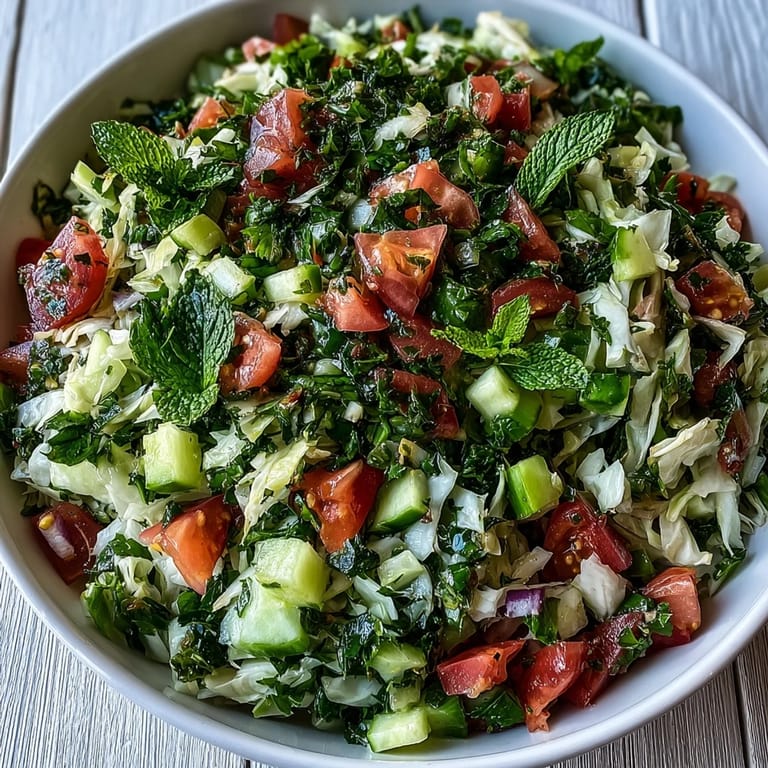
 My neighbor Layla taught me this salad one humid summer afternoon when she showed up at my door with a bag of cabbage and herbs from her garden. She moved through my kitchen with such ease, shredding vegetables with one hand while telling stories about her grandmother's kitchen in Beirut, and I realized how this simple combination held so much more than flavors—it held memories. Now whenever I make it, that kitchen fills with the same bright, alive feeling.
I served this at a potluck last spring and watched people come back for thirds, mixing it onto their plates like they'd discovered something they didn't know they were hungry for. Someone asked if it was complicated, and I loved being able to say no—just good attention to detail and ingredients that actually taste like something.
Ingredients
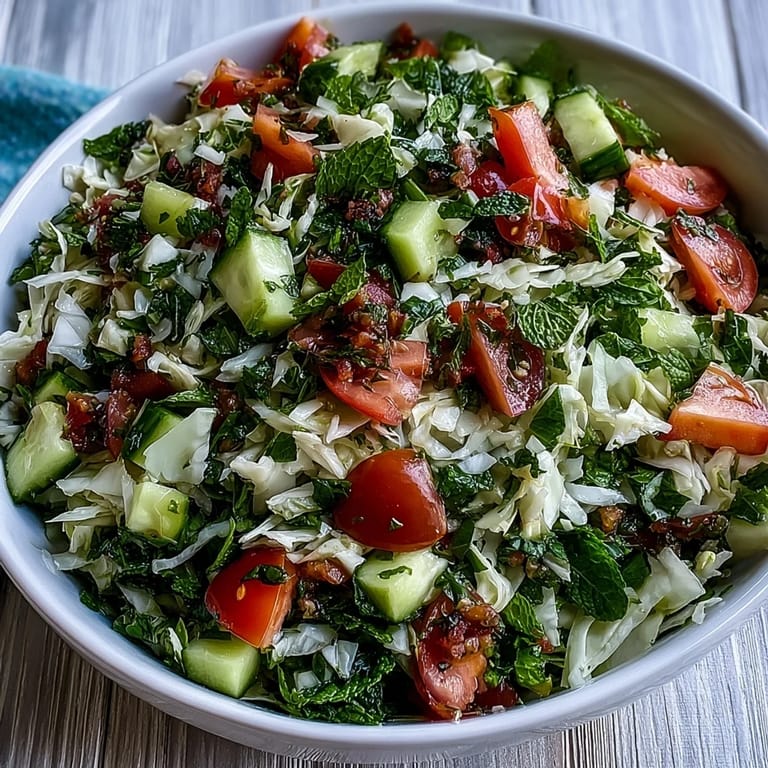
- Green cabbage, finely shredded: The foundation that stays crisp even after the dressing settles in, so shred it thin enough to be tender but coarse enough to hold its structure.
- Tomato, diced: Pick one that's actually ripe and flavorful, not those mealy ones sitting under lights—the difference is everything.
- Cucumber, diced: Use the English kind if you can, thinner skin and fewer seeds means less watery and more pleasant texture.
- Green onions, thinly sliced: Both the white and green parts add different things, so use all of them for layers of onion flavor without overpowering.
- Fresh parsley, finely chopped: This is the volume player here, so don't skimp—it brightens and lightens the whole salad in ways dried never could.
- Fresh mint, finely chopped: Half a cup might sound like a lot, but mint in Lebanese cooking is bold and unapologetic, and that's what makes it sing.
- Freshly squeezed lemon juice: Bottled juice tastes tired; fresh lemon juice is the difference between flat and alive.
- Extra-virgin olive oil: Use one you actually like tasting, because you'll taste every drop in this simple dressing.
- Garlic clove, minced: Just one, so the salad stays fresh-tasting and doesn't become about garlic instead of vegetables.
- Sea salt and black pepper: Taste as you go—the salt level depends on whether your vegetables are naturally salty and how much you're serving with.
Tired of Takeout? 🥡
Get 10 meals you can make faster than delivery arrives. Seriously.
One email. No spam. Unsubscribe anytime.
Instructions
- Shred and dice with purpose:
- Work through each vegetable with intention—cabbage shreds thin and fine, tomato and cucumber cut small enough to be delicate. Listen to the knife on the board, it's almost meditative.
- Build the salad bed:
- Toss cabbage, tomato, cucumber, and green onions in a large bowl, letting them settle together and start releasing their own juices.
- Add the bright notes:
- Scatter parsley and mint over everything, handling them gently so they don't bruise and turn dark.
- Whisk the dressing together:
- In a small bowl, combine lemon juice, olive oil, minced garlic, salt, and pepper, whisking until the emulsion looks slightly creamy and cloudy, which means everything is actually mixing.
- Bring it all together:
- Pour that dressing over the salad and toss thoroughly, making sure every strand of cabbage gets coated and the herbs distribute evenly. This is where the magic starts.
- Taste and adjust:
- Season again if needed—lemon can fade, salt matters more than you think—then serve immediately or let it chill for 10 to 15 minutes so the flavors actually meld into something more complex.
 Pin this
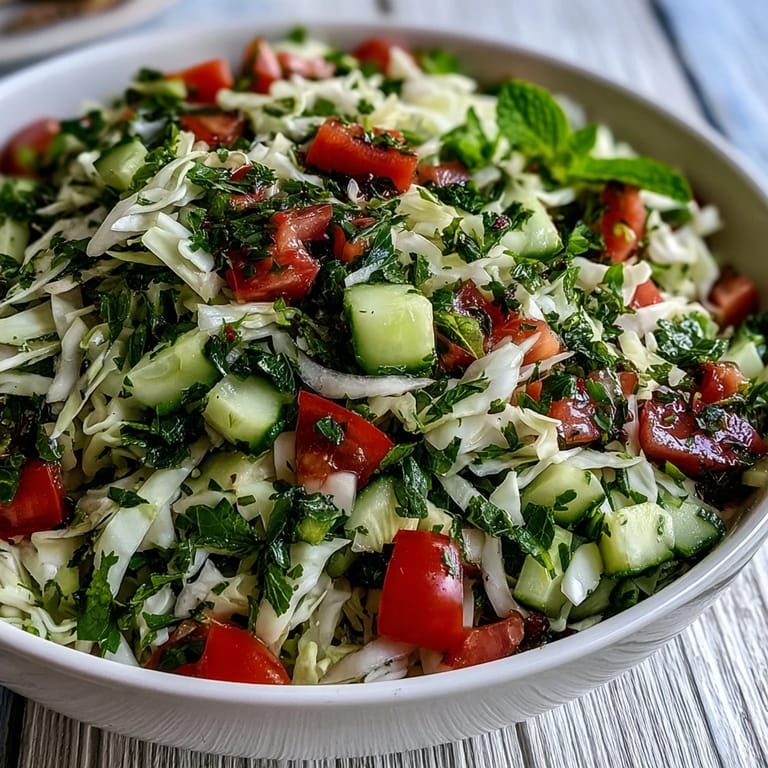
 What gets me about this salad is how honest it is—no pretense, no tricks, just vegetables and herbs that taste like themselves. My sister once told me it reminded her of summer in her friend's backyard, and I think that's the point.
What Makes Lebanese Salads Different
Lebanese salads aren't about technique or complexity—they're about using what's fresh, respecting the ingredients, and understanding that sometimes a salad is the main event. The herbs here aren't garnish, they're equal players, which is why you use so much of them. It's a way of thinking about food that I've come to love, where a simple salad can be completely satisfying and deeply flavored at the same time.
Timing and Serving
This salad lives in a sweet window—serve it right away if you want maximum crunch, or let it chill 10 to 15 minutes if you want the dressing to fully settle in and the flavors to deepen. It pairs beautifully alongside grilled chicken, lamb, or falafel, but honestly it's substantial enough to be lunch on its own with some bread. I've also found that it's one of those salads that tastes better the second time you eat it, if there is one.
Making It Your Own
The recipe is flexible enough to become whatever your kitchen looks like today—swap red cabbage for color and a slightly different flavor, add toasted pine nuts for richness, or throw in some diced bell pepper if you want sweetness. I once made it with red onion instead of green onions when that's all I had, and it was equally good, just bolder. The core principle stays the same: fresh, bright, herbaceous, and balanced with just enough lemon and oil to make everything come together.
- Toast pine nuts or slivered almonds in a dry pan for a minute and scatter them over just before serving for crunch that actually stays.
- Red cabbage makes this visually striking and tastes slightly earthier, so adjust the salt and lemon upward just a touch.
- If you're making this ahead for a picnic or potluck, pack the dressing separately and toss everything together right before eating.
 Pin this
 This salad has become something I reach for when I want food that tastes like care without requiring hours in the kitchen. It's the kind of thing that makes you feel good about eating, which might be the whole point.
Frequently Asked Recipe Questions
- → Can I prepare this salad in advance?
While best served fresh, you can prepare the vegetables and dressing separately up to 4 hours ahead. Combine them just before serving to maintain the cabbage's crispness and prevent wilting.
- → What can I substitute for fresh mint?
Fresh cilantro or additional parsley work well as substitutes. Avoid dried mint as it lacks the bright, fresh flavor essential to this salad.
- → How do I store leftovers?
Store in an airtight container in the refrigerator for up to 24 hours. The salad will soften as it sits, so it's best consumed the same day.
- → Can I use red cabbage instead of green?
Yes, red cabbage makes an excellent colorful variation. You can also use a mix of both green and red cabbage for visual appeal and slightly different texture.
- → What dishes pair well with this salad?
This salad complements grilled meats, falafel, shawarma, kebabs, and other Middle Eastern dishes. It also works wonderfully as part of a mezze spread.
- → How can I make the salad more substantial?
Add toasted pine nuts, slivered almonds, chickpeas, or crumbled feta cheese for extra protein and texture. You can also serve it over a bed of quinoa or bulgur.