 Pin this
 There's something oddly comforting about the moment when you realize instant ramen doesn't have to feel like a compromise. I was standing in front of my pantry at 6 PM on a Wednesday, tired and hungry, staring at two packages of ramen when I spotted a bag of frozen peas in the freezer. Five minutes later, I had a bowl that tasted like I'd actually tried, and my roommate asked for the recipe. That's when I understood: the best meals aren't always the most complicated, they're just the ones made with a little intention.
My friend Marcus came over during a particularly broke week of mine, and I nervously made him this bowl, unsure if he'd think it was too simple. He took one slurp and said, "Why does this taste like actual ramen?" That's when I realized the secret wasn't in fancy ingredients—it was in the sesame oil hitting hot garlic, in the peas thawing into the broth, in caring enough to add green onions on top. Sometimes the smallest details are what make someone feel fed, not just full.
Ingredients
- 2 packs instant ramen noodles: Keep both the noodles and seasoning packets—you control the flavor, not the package.
- 1 cup frozen peas: They add sweetness and bright color without thawing first; the heat does the work for you.
- 1 cup frozen mixed vegetables: Carrots, corn, and green beans bring texture and keep the bowl from feeling one-note.
- 2 green onions, sliced: The raw brightness at the end is what makes someone notice the difference.
- 2 cloves garlic, minced: Toast this in the oil first—it's the foundation that makes everything taste better.
- 4 cups low-sodium vegetable broth: Water works, but broth gives you depth without effort.
- 2 tablespoons soy sauce: Use tamari if you're avoiding gluten; taste as you go because saltiness varies by brand.
- 1 teaspoon sesame oil: This small amount does disproportionate work—don't skip it.
- 2 large eggs, soft-boiled or poached: Optional, but they make it feel like a real meal instead of a snack.
- 1 tablespoon toasted sesame seeds: A tiny sprinkle changes everything texturally.
- Chili flakes or sriracha: Heat is personal; let everyone decide their own level.
Tired of Takeout? 🥡
Get 10 meals you can make faster than delivery arrives. Seriously.
One email. No spam. Unsubscribe anytime.
Instructions
- Toast the aromatics:
- Pour sesame oil into a medium saucepan over medium heat and let it warm for just a moment before adding minced garlic. That sizzle you hear is where all the flavor starts—keep it for 30 seconds until the smell fills your kitchen.
- Build the broth:
- Pour in your vegetable broth and soy sauce, then watch for the first gentle bubbles at the edge. This isn't a rolling boil; you want a soft simmer that respects the vegetables you're about to add.
- Add the vegetables:
- Frozen peas and mixed vegetables go in together and need just 2 to 3 minutes to warm through. You'll see them soften and the color of the broth shift slightly as they release their starch.
- Cook the noodles:
- Add the ramen noodles directly to the broth with the choice to use or skip the seasoning packet. Let them cook for 2 to 3 minutes until they're tender but still have a slight resistance when you bite into them.
- Season and finish:
- Stir in half the green onions and taste. This is your moment to adjust—add more soy sauce if it needs depth, or a pinch more sesame oil if it feels flat.
- Plate and top:
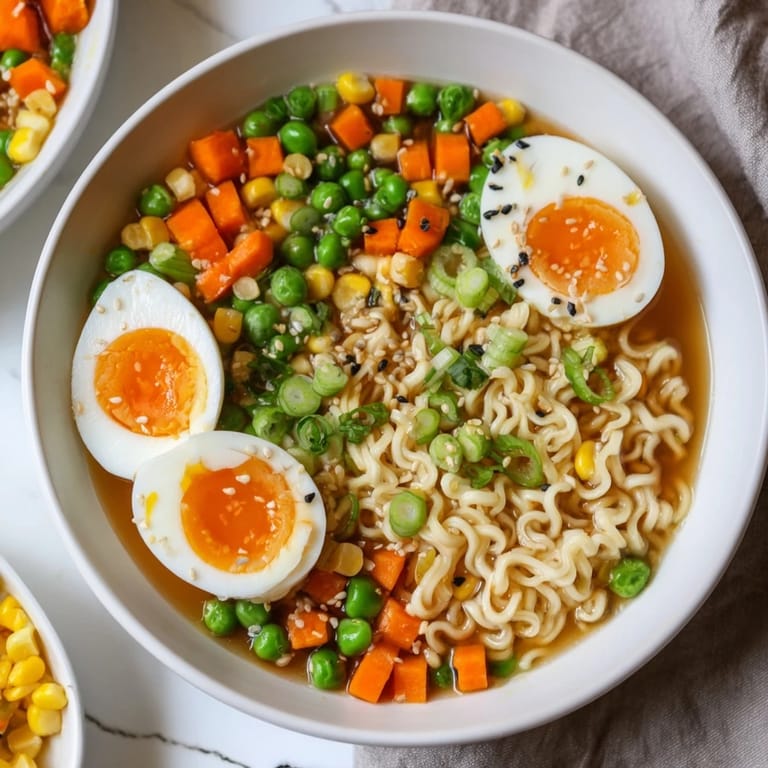
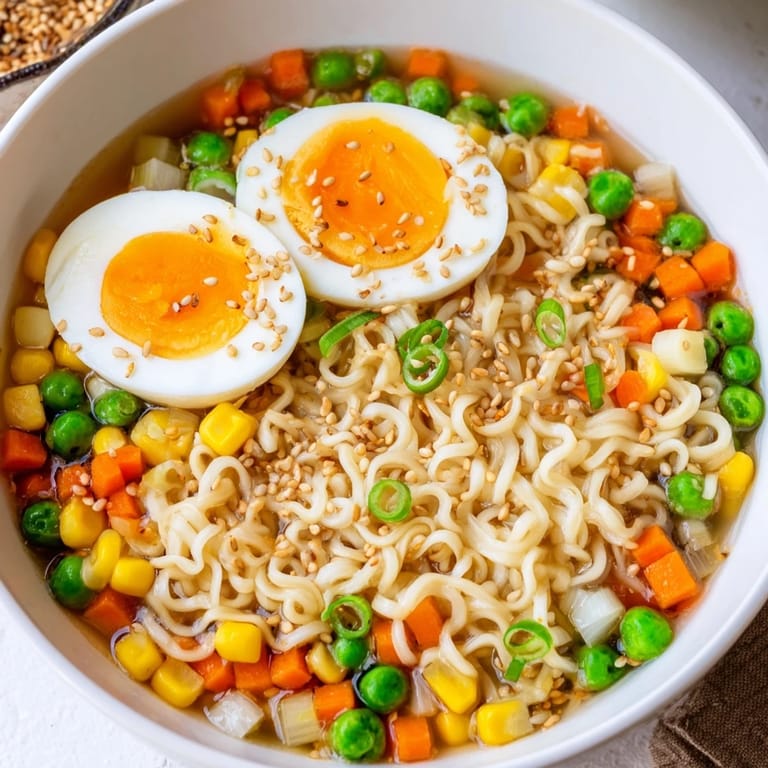
- Divide the ramen, broth, and vegetables between two bowls, then crown each with a soft-boiled egg if you're using one, the remaining green onions, a scatter of sesame seeds, and whatever level of heat you want from chili flakes or sriracha.
 Pin this
 The moment I understood this recipe's real power was when I made it for a friend who was having a terrible day. She sat on my counter, half-smiling, holding a warm bowl, and said it was exactly what she needed. It wasn't fancy, but it was thoughtful, and I realized that's what cooking is really about.
Why Frozen Vegetables Are Your Secret Weapon
There's an unfair stigma around frozen vegetables, but I've learned they're actually superior for this dish. They're picked at peak ripeness and frozen immediately, meaning they have more nutrients locked in than many fresh vegetables sitting in a grocery store. When they hit hot broth, they soften in seconds without becoming mushy, and they release their flavors directly into the liquid instead of just sitting there.
Making It Feel Like a Real Meal
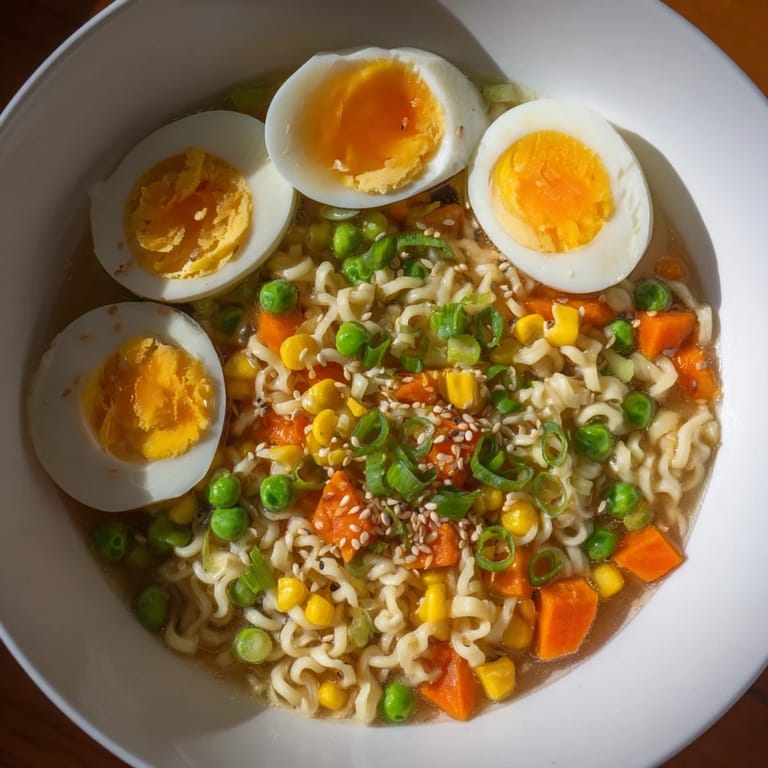
The difference between "I ate ramen" and "I made ramen" is often just the toppings. A soft-boiled egg adds protein and richness, green onions bring a raw bite that contrasts the warm noodles, and sesame seeds give you something to hear when you eat. You can make this as simple or as dressed-up as your day allows.
Variations and Swaps to Keep It Fresh
Once you understand how this bowl works, it becomes a canvas for whatever you have on hand or whatever you're craving. Spinach wilts into the broth in seconds, edamame adds a different kind of heartiness than peas, and leftover shredded chicken transforms it from side dish to main course without any extra cooking.
- For extra protein without cooking, toss in some tofu cubes or use the leftover rotisserie chicken from yesterday's dinner.
- If you're out of sesame oil, a drizzle of sriracha mayo on top brings heat and richness instead.
- Save the water you boil an egg in and use it as your broth base for an earthy depth that feels intentional.
 Pin this
 This bowl is proof that the best cooking happens when you stop trying to impress and start paying attention. Fifteen minutes from now, you'll have something warm and real.
Frequently Asked Recipe Questions
- → Can I use fresh peas instead of frozen?
Yes, fresh peas can be used; simply reduce cooking time slightly to keep their texture crisp and bright.
- → What can I substitute for sesame oil?
Vegetable or olive oil can be used as alternatives, though sesame oil adds a distinctive nutty aroma.
- → How do I make this dish vegan-friendly?
Omit eggs and use vegetable-based noodles or verified vegan noodles to keep the dish plant-based.
- → Can I add protein to this meal?
Yes, tofu, shredded chicken, or other proteins can be added to enhance flavor and nutritional value.
- → How can I make this gluten-free?
Use gluten-free noodles and tamari sauce instead of soy sauce to accommodate gluten sensitivities.
- → What vegetables work well with this dish?
Besides frozen peas, mixed frozen vegetables like carrots, corn, and green beans complement the flavors nicely.