 Pin this
 I discovered the magic of this dish at a tiny bistro in Lyon, watching a chef arrange vegetables with the precision of an artist. The way each slice spiraled outward, overlapping like a nautilus shell, absolutely mesmerized me. I went home that evening determined to recreate it in my own kitchen, and what started as an ambitious experiment became my signature appetizer—something I now make whenever I want to impress without spending hours hovering over a stove.
I'll never forget making this for my partner's parents the first time I brought them to dinner. I was nervously arranging the spiral when my partner's mother walked into the kitchen, and her immediate gasp of delight told me everything would be fine. She took a photo before anyone could touch a bite, and it ended up being the conversation starter for the entire meal.
Ingredients
- 1 small eggplant, thinly sliced lengthwise: Eggplant gives you that silky texture and absorbs flavors beautifully. Slice it thin enough to drape, and you've got architectural material that won't fall apart.
- 1 medium zucchini, thinly sliced lengthwise: The zucchini keeps things light and adds a subtle sweetness that balances the earthiness of the eggplant perfectly.
- 1 red bell pepper, seeded and thinly sliced: Red peppers are your color star here—they stay vibrant even after roasting and add a gentle sweetness.
- 1 yellow squash, thinly sliced lengthwise: This creates visual contrast and a slightly delicate flavor that won't overpower the other vegetables.
- 1 small carrot, peeled and thinly sliced lengthwise: Carrots add earthy depth and natural sweetness. They're also sturdy enough to maintain their structure during roasting.
- 100 g goat cheese, softened: Use good quality goat cheese—it should taste tangy and creamy, almost like spreading butter infused with brightness.
- 2 tbsp crème fraîche: This loosens the goat cheese into a spreadable mixture without diluting the flavor. It's your secret to smooth application.
- 2 tbsp fresh basil leaves, finely chopped: Fresh basil here is non-negotiable. It brings green, peppery notes that make the whole dish feel summery.
- 1 tbsp fresh thyme leaves: Thyme adds an earthiness and subtle complexity that makes people wonder what spice they're tasting.
- 2 tbsp olive oil: Use something you enjoy tasting—this isn't the moment for cooking oil. Good olive oil is tasted in every bite.
- ½ tsp sea salt: Salt before roasting helps the vegetables release their water and concentrate their flavors.
- ¼ tsp freshly ground black pepper: Fresh pepper matters more than you'd think. Those little bursts of flavor change everything.
- 1 tbsp pine nuts, lightly toasted: Toast them yourself just before serving—the warmth releases their nutty oils and makes them taste alive on the plate.
- Microgreens, for garnish (optional): These are your final flourish, adding delicate texture and a peppery brightness that ties everything together.
Tired of Takeout? 🥡
Get 10 meals you can make faster than delivery arrives. Seriously.
One email. No spam. Unsubscribe anytime.
Instructions
- Get Your Oven Ready and Prep Your Station:
- Preheat the oven to 200°C and line your baking tray with parchment paper. This prevents sticking and makes cleanup almost joyful. Lay out all your vegetables where you can see them—part of the pleasure of this dish is choosing which slices you'll use.
- Prepare the Vegetables with a Gentle Hand:
- Using a sharp knife or mandoline (mandoline is faster, but be careful), slice each vegetable lengthwise as thinly as you can manage. You want them thin enough to drape and overlap, but sturdy enough to hold their shape. As you slice, lightly brush each slice with olive oil on both sides—this is your moment to really feel the vegetables and get a sense of their texture. Season everything with salt and pepper.
- Roast Until They're Tender and Pliable:
- Lay the vegetable slices in a single layer on your prepared tray. They'll look like they're barely touching the oil, but trust this. Roast for 10 to 12 minutes. You're looking for that magical moment when they're soft enough to bend without cracking, but not so cooked that they lose their color. The kitchen will smell incredible. The moment you pull them out, you'll feel like you're already winning.
- Make Your Creamy Herb Mixture:
- While the vegetables cool slightly, combine the softened goat cheese, crème fraîche, chopped basil, and thyme in a small bowl. Stir until completely smooth and spreadable. Taste it. Adjust the herbs if you want—this mixture is your canvas and your flavor foundation.
- Create the Spiral Foundation:
- On your serving plate, start at the very center and spread a thin, even layer of the goat cheese mixture in a continuous spiral, working outward toward the edges. Use the back of a spoon or a small spatula. Make sure every inch of the spiral is covered, because this is what holds everything together and what people taste first.
- Arrange the Vegetables in a Stunning Spiral:
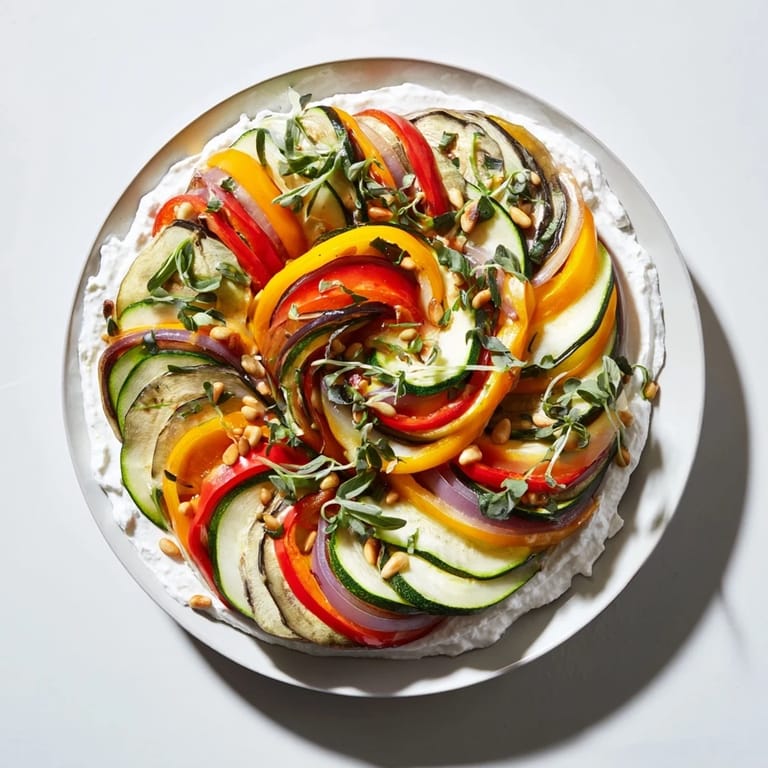
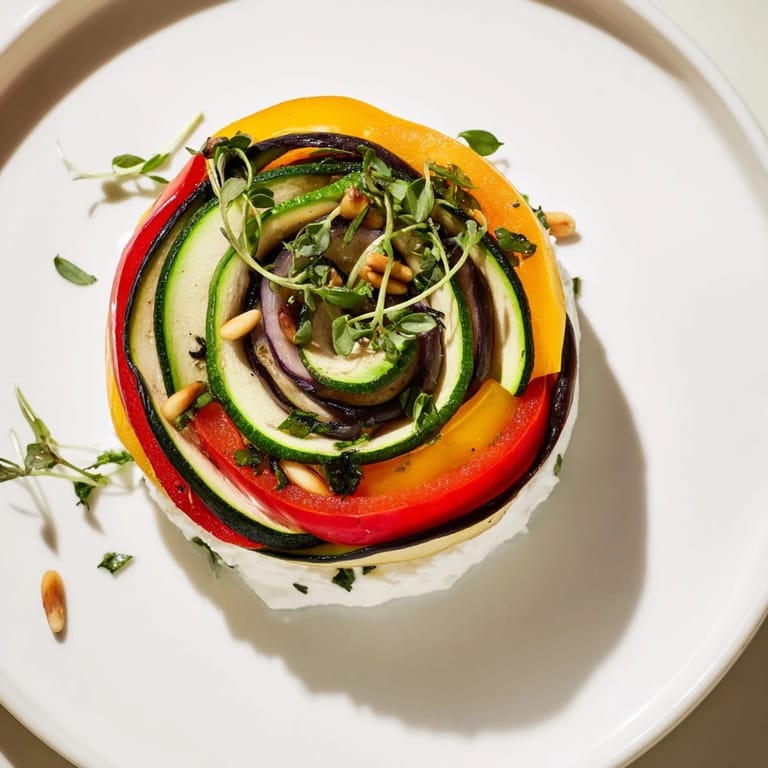
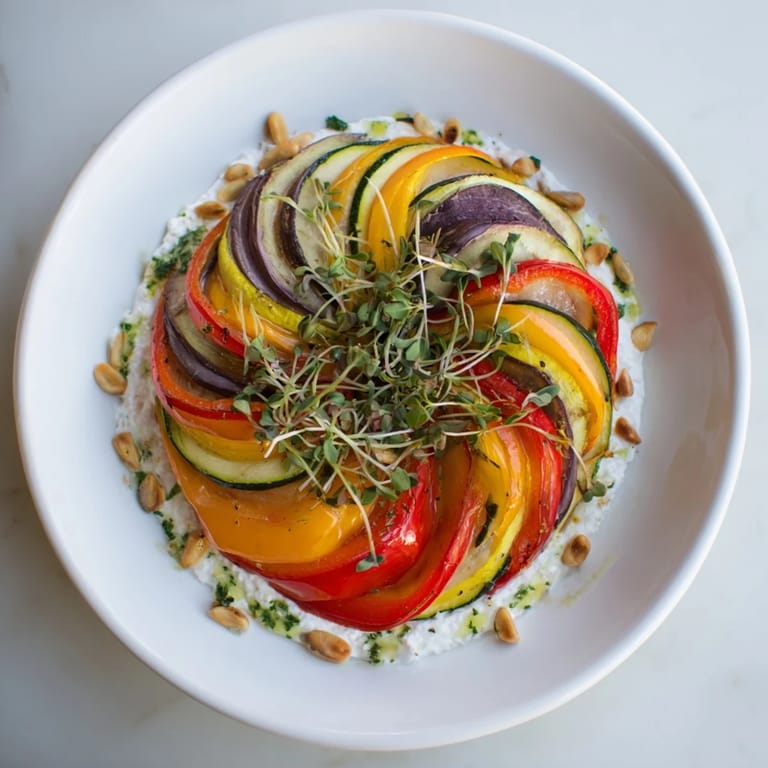
- Beginning at the center of your cheese spiral, start laying down the roasted vegetable slices, slightly overlapping each one as you spiral outward. This is where artistry meets cooking. Alternate the colors as you go—a slice of eggplant, then zucchini, then red pepper, then yellow squash, then carrot, then back to eggplant. The overlapping creates movement and the color changes create visual rhythm. Step back occasionally and look at your work. There's no rush here, and the care you take shows.
- Finish with Elegance:
- Once the spiral is complete, sprinkle the lightly toasted pine nuts over the top, distributing them evenly. If you're using microgreens, add them as your final gesture, placing them where there are small gaps or simply across the top. These last touches are what make people lean in for a closer look before they eat.
- Rest and Serve:
- Let the finished dish rest at room temperature for a few minutes before serving. This isn't the time to rush it into the refrigerator. Room temperature is where all these flavors come alive together. Serve as an elegant appetizer, a light lunch, or even as a side dish at dinner.
 Pin this
 The first time someone brought this dish to a potluck and it was the first thing to empty from the platter, I realized it had become something beyond just a pretty appetizer. It became a conversation starter, a moment of beauty before the meal, and somehow a small way of saying to everyone around the table: you're worth the care this took.
The Art of Vegetable Selection
The vegetables you choose become your palette, and different seasons offer different opportunities. In summer, when everything is at its peak, the flavors are naturally more vibrant and the colors more vivid. In winter, you might add roasted beets or sweet potatoes as the recipe notes suggest, which brings earthiness and deeper color. The beauty of this dish is that it's completely flexible—what matters is that you slice them thin, roast them until they're tender, and arrange them with intention. Some people swear by adding a very thin slice of roasted fennel for subtlety, while others introduce thinly sliced roasted mushrooms for umami depth. The spiral format means you can experiment without the dish ever looking wrong.
Understanding the Goat Cheese Mixture as the Soul of the Dish
That cream cheese mixture is doing far more work than it seems. It's not just holding everything together—it's the flavor foundation, the creamy texture that makes every bite feel composed, and it's what makes people taste the fresh herbs even before they realize they're tasting herbs. The crème fraîche is the secret weapon here. It loosens the goat cheese into something spreadable without requiring cream or milk, which would dilute the tang and flavor. I learned this the hard way after my first attempt, when I used plain yogurt and ended up with something that tasted watered down. The moment I switched to crème fraîche, everything changed. Now I always make extra and serve it on the side with crusty bread.
Variations and Serving Suggestions
This dish is endlessly adaptable, which is part of why it's become my go-to impressive appetizer. For a vegan version, substitute the goat cheese and crème fraîche with a good quality plant-based cheese spread that has actual flavor. For a richer version, try a whipped ricotta instead of goat cheese, which adds creaminess without as much tang. Some of my friends add a touch of lemon zest to brighten everything up, while others drizzle just a tiny bit of good balsamic reduction in the center for sweetness and depth. You can serve it immediately at room temperature, or you can make it a few hours ahead and let it sit in the refrigerator, bringing it back to room temperature just before serving. The flavors actually meld better after a little rest. Always serve with crusty bread or good crackers alongside, because people will want something to balance the richness of the cheese and vegetables.
- Try adding a whisper of lemon zest to the goat cheese mixture for brightness and complexity
- Experiment with different vegetables each season—roasted beets, sweet potatoes, or thinly sliced mushrooms all work beautifully
- Make it ahead and let it rest in the refrigerator—the flavors deepen and meld after a few hours
 Pin this
 Every time I make this dish, I'm reminded that some of the most elegant food comes from simple ingredients arranged with care. It's the kind of recipe that teaches you as much about cooking as it does about eating together.
Frequently Asked Recipe Questions
- → What vegetables are used in this spiral dish?
Thinly sliced eggplant, zucchini, red bell pepper, yellow squash, and carrot are combined to create the spiral.
- → How are the vegetables prepared before arranging?
The vegetables are lightly brushed with olive oil, seasoned, roasted briefly until pliable, then cooled before assembly.
- → What cheese is used in the base layer?
A smooth mixture of goat cheese and crème fraîche, blended with fresh basil and thyme, forms the creamy spiral base.
- → Can this dish be served warm?
It is best served at room temperature to preserve the fresh flavors and maintain the elegant arrangement.
- → Are there any suggested garnishes?
Toasted pine nuts add crunch, while microgreens provide a fresh, decorative touch when sprinkled on top.