 Pin this
 The first time I assembled a proper charcuterie board, I was terrified of making it look casual enough. I'd spent an hour arranging and rearranging slices of prosciutto, convinced that perfection required sterile precision. Then my friend walked in, laughed, and said the board looked like it was trying too hard. That's when I learned that the best boards aren't about control—they're about abundance and invitation. The Crimson Crest taught me that luxury is just generosity with the right ingredients.
I made this board for a dinner party on a winter evening, when the light was already fading at five o'clock. Someone brought a bottle of Malbec that cost more than I'd planned to spend on drinks, and suddenly the whole evening shifted. The pomegranate seeds looked like tiny rubies scattered across the platter, and watching people's eyes light up as they realized everything was intentionally red—that's when I understood boards aren't about food, they're about theater.
Ingredients
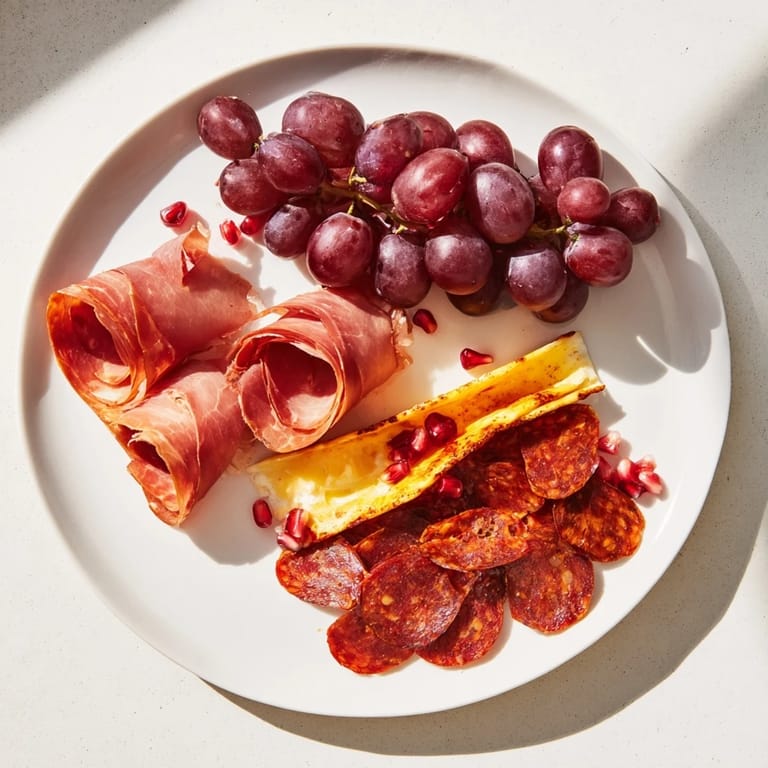
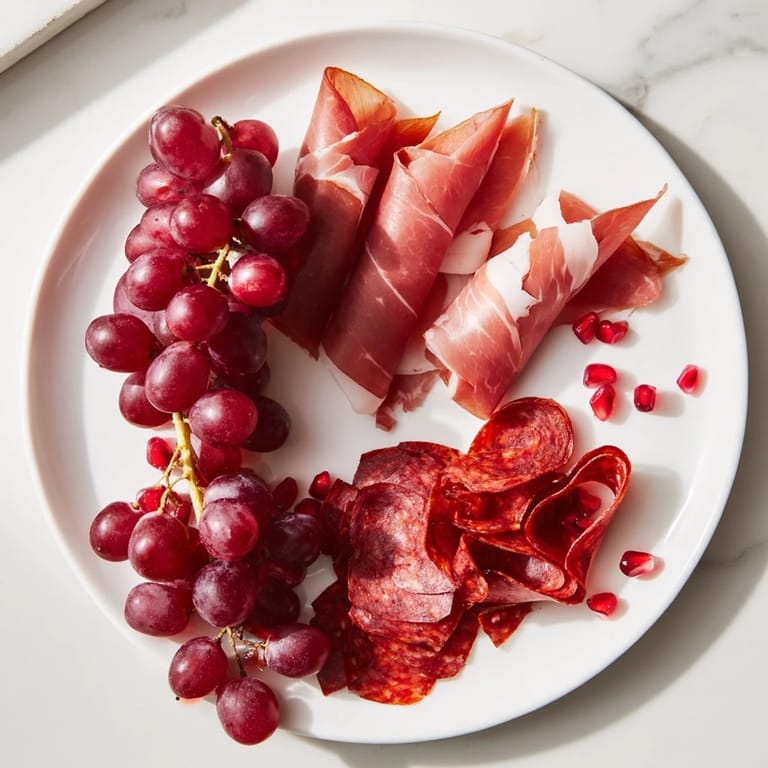
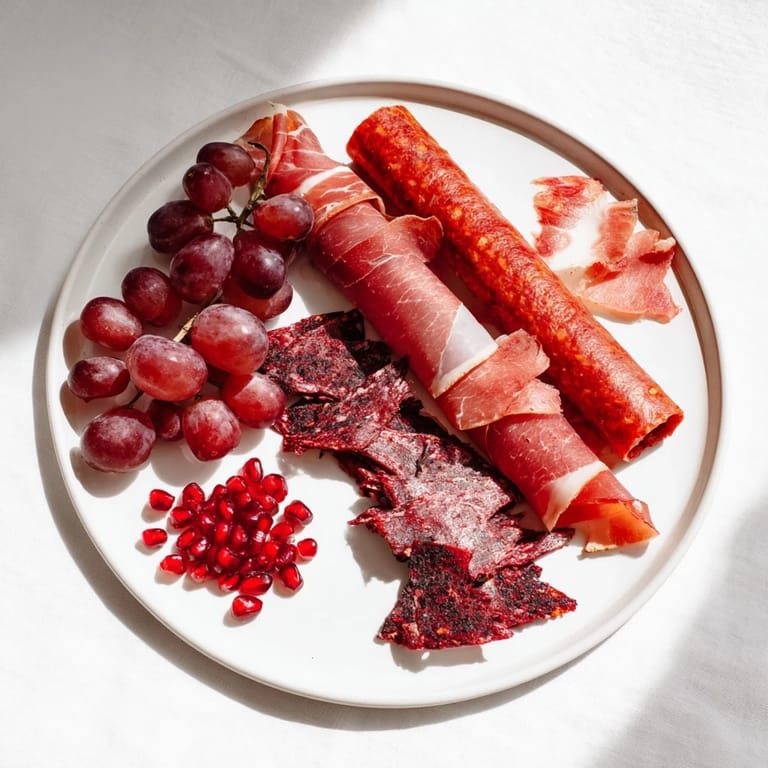
- Prosciutto: Slice it thin, drape it loosely—it's the silk scarf of the meat world and deserves to be treated like it.
- Bresaola: This air-dried beef brings an earthy depth that makes everything else taste more sophisticated than it is.
- Spicy chorizo: Thinly slice it to showcase the paprika color and let the heat peek through subtly rather than announce itself.
- Smoked beef salami: The quiet presence that grounds the board with richness and a gentle smoke flavor.
- Drunken Goat cheese: These wine-soaked rounds are why this board deserves its name—creamy, tangy, absolutely show-stopping.
- Red Wine Cheddar: Cube rather than slice these so they catch light differently and add textural interest to the arrangement.
- Merlot BellaVitano: Hard enough to slice cleanly but soft enough to melt slightly on a warm cracker, it's the bridge between meats and cheese.
- Red grapes: Wash them and leave them in small clusters so they look like they belong in a still life painting.
- Pomegranate seeds: These are pure visual gold—de-seed them over a bowl to catch any stains, then scatter across the board like intentional garnish.
- Red onion jam: Serve in a small bowl so guests know this is meant to be scooped onto crackers, not ignored.
- Roasted red peppers: Slice them thick enough to stay intact but thin enough to be elegant; they bridge the gap between vegetable and luxury.
- Dried cranberries: These pop visually and taste like a secret—sweet but never cloying, they're the punctuation marks of the board.
- Baguette: Slice it fresh if possible; stale bread on a luxury board is like wearing scuffed shoes to a party.
- Red beet crackers: Their earthiness complements the wine-soaked cheeses perfectly and they stay crispy longer than regular crackers.
- Fresh rosemary sprigs: Break them gently so the scent releases as you arrange, letting aroma set the mood before anyone even tastes anything.
- Edible rose petals: Optional but never unnecessary—they're what transforms a board from impressive to memorable.
Tired of Takeout? 🥡
Get 10 meals you can make faster than delivery arrives. Seriously.
One email. No spam. Unsubscribe anytime.
Instructions
- Set the stage with red meats:
- Fold or roll your prosciutto into loose waves, let the bresaola drape gently, fan out the spicy chorizo to show off its color, and stack the smoked salami casually. Keep each meat in its own cluster so flavors don't blur together, but let them touch at the edges like they're having a conversation.
- Arrange the wine-kissed cheeses:
- Fan the Drunken Goat slices so they overlap slightly, cube the Red Wine Cheddar so it catches light, and lay out the Merlot BellaVitano in a flowing pattern. Position them near or between the meats—they're both main characters, not supporting actors.
- Scatter the jewel tones:
- Nestle red grapes in small clusters, scatter pomegranate seeds across the board where they'll glisten, and sprinkle dried cranberries where the eye might otherwise rest too long on one section. These little pops of color guide people's hands toward different areas of the board.
- Tuck in the supporting players:
- Place roasted red peppers in curved arrangements, nestle the bowl of red onion jam in a corner where it looks intentional rather than squeezed in, and position baguette slices and beet crackers in the gaps. They're the vehicle for the stars, so arrange them like they matter.
- Garnish with intention:
- Tuck fresh rosemary sprigs between meats and cheeses so their green-on-red contrast looks deliberate, and scatter edible rose petals across the top as the final gesture. Step back, adjust one thing, then stop—the moment it looks effortless, it's done.
- Serve at room temperature:
- Let the board sit for a few minutes so everything reaches the same temperature and flavors can mingle slightly in the air.
 Pin this
 A colleague once said her dinner was saved by a charcuterie board because her main dish was late, and everyone was too busy talking and eating and reaching across each other that they forgot to be hungry. That's when I realized these boards aren't insurance policies—they're permission slips to slow down and enjoy each other's company instead of judging the food.
The Red Wine Philosophy
Every cheese and meat on this board either contains red wine or is meant to be eaten with red wine in your other hand. This isn't accidental pairing—it's the entire concept speaking one language. When you pour a Cabernet Sauvignon or Malbec, watch how the tannins interact with the salt of the prosciutto, the richness of the Drunken Goat, the smoke of the salami. The board becomes less about individual ingredients and more about how they collectively make wine taste even better.
Building Your Own Variations
The Crimson Crest is a template more than a rule. I've added red wine-soaked blue cheese when I wanted more funk, scattered aged Manchego rubbed with smoked paprika for a Spanish turn, and once included thinly sliced blood oranges just to see what would happen. The magic isn't in following the recipe exactly—it's in understanding that every element needs to harmonize with the wine and the red-toned palette.
Why This Matters More Than You Think
Assembly boards are often dismissed as lazy entertaining, and that frustrates me because they're actually the opposite. You're making choices about texture, flavor, color, and narrative with every placement. You're deciding how people will experience luxury and generosity. A well-built board says 'I thought about you' louder than a three-course meal.
- This is the board you make when you want to impress people but respect your own time more than tradition demands you respect it.
- It works for 6 people or 12 because the principle is abundance, not portion control—make more than you think you'll need and watch it disappear.
- Serve with small plates and cheese knives so people feel invited to linger rather than grab and run.
 Pin this
 The Crimson Crest is proof that sometimes the simplest entertaining is the most elegant. Set it down, pour the wine, and let people remember that food was always supposed to be about gathering.
Frequently Asked Recipe Questions
- → What types of meats are used in the Crimson Crest board?
The board includes prosciutto, bresaola, spicy chorizo, and smoked beef salami, offering a range of textures and robust flavors.
- → How are the cheeses prepared for the board?
Cheeses such as Drunken Goat and Merlot BellaVitano are soaked in red wine, sliced or cubed, and arranged in clusters near the meats.
- → What accompaniments complement the meats and cheeses?
Red grapes, pomegranate seeds, dried cranberries, roasted red peppers, red onion jam, baguette slices, and red beet crackers add freshness and texture contrast.
- → Are there suggested garnishes for enhancing the board?
Fresh rosemary sprigs and edible rose petals are used for aroma and visual appeal, enhancing the overall sensory experience.
- → Can substitutions be made for dietary restrictions?
Yes, gluten-free crackers can replace standard options, and additional cheese varieties like blue cheese or Manchego provide more variety.