 Pin this
 I discovered the magic of stripes by accident at a dinner party when I ran out of space on my appetizer platters. Instead of piling everything together, I decided to line up thin slices of creamy mozzarella next to strips of seared beef, just to see how it looked. My friend Sarah walked in, stopped in her tracks, and said, "That's almost too beautiful to eat." That comment stuck with me, and now Safari Stripes is my go-to when I want to impress without spending hours in the kitchen.
The first time I made this for my book club, someone asked if I'd hired a caterer. I let them believe it for about three seconds before confessing I'd made it that afternoon. What I love most is the quiet confidence it gives you when hosting, knowing you have something visual and delicious that you can actually pull off without stress.
Ingredients
- Fresh mozzarella, 250 g sliced into 1 cm strips: The creamy anchor that balances the richness of the meat; choose blocks over pre-packaged if you can, as they slice cleaner and taste fresher.
- Feta cheese, 200 g sliced into 1 cm strips: Its tang and slight crumbly texture add complexity and keep the platter from feeling one-note.
- Beef tenderloin, 200 g cut into 1 cm thick strips: The premium cut ensures tenderness, and thin slices cook fast enough to stay juicy.
- Chicken breast, 200 g cut into 1 cm thick strips: Leans toward lighter but stays meaty; pound it slightly before slicing if it feels particularly thick.
- Olive oil, 2 tbsp: Use your better oil here since it hits the pan hot and flavors matter.
- Salt and freshly ground black pepper, to taste: Toast your peppercorns if you have a grinder; freshly cracked black pepper tastes brighter than pre-ground.
- Balsamic vinegar, 120 ml: The foundation of your glaze; choose one that tastes good on its own, not just acidic.
- Honey, 1 tbsp: Rounds out the vinegar's sharpness and helps the glaze cling to the meat.
- Fresh basil leaves: Tear them by hand rather than cutting to preserve their flavor and look.
- Cracked black pepper for garnish: A final sprinkle that makes the whole thing feel intentional.
Tired of Takeout? 🥡
Get 10 meals you can make faster than delivery arrives. Seriously.
One email. No spam. Unsubscribe anytime.
Instructions
- Make the balsamic glaze:
- Combine balsamic vinegar and honey in a small saucepan and bring to a simmer over medium heat. Once it's bubbling gently, reduce the heat low and let it reduce for 8 to 10 minutes until it becomes thick and syrupy; you'll know it's ready when a spoon dipped in feels glossy and coats the back without dripping immediately. Pour it onto a small plate to cool faster while you work on everything else.
- Sear the proteins:
- Season your beef and chicken strips generously with salt and pepper on both sides. Heat olive oil in a skillet over medium-high heat until it shimmers, then working in batches so you don't crowd the pan, sear the beef for about 1 to 2 minutes per side until the outside is golden and the inside stays tender. Set it aside on a clean plate and repeat with the chicken, which may take slightly longer if your strips are thicker.
- Arrange the pattern:
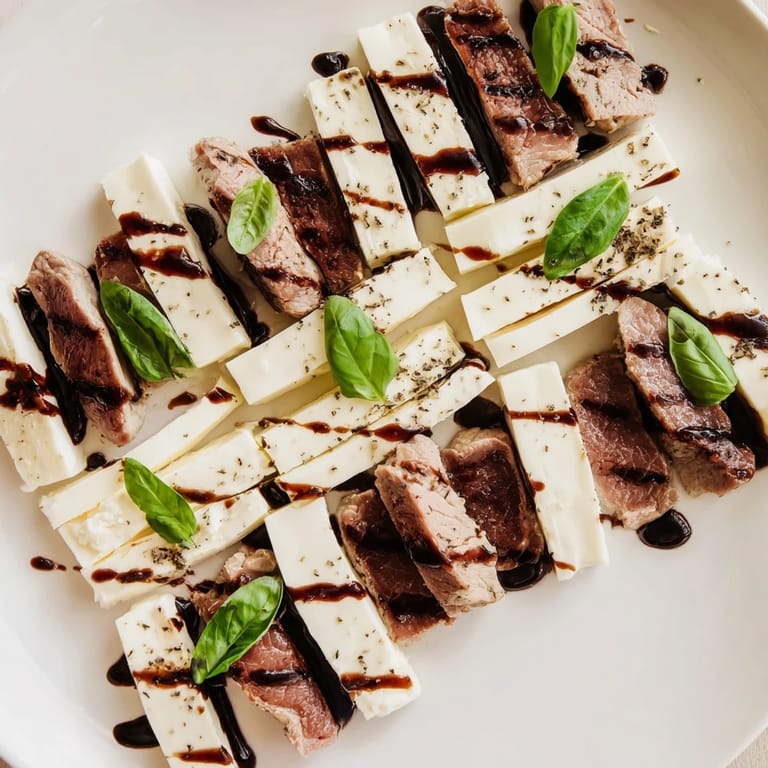
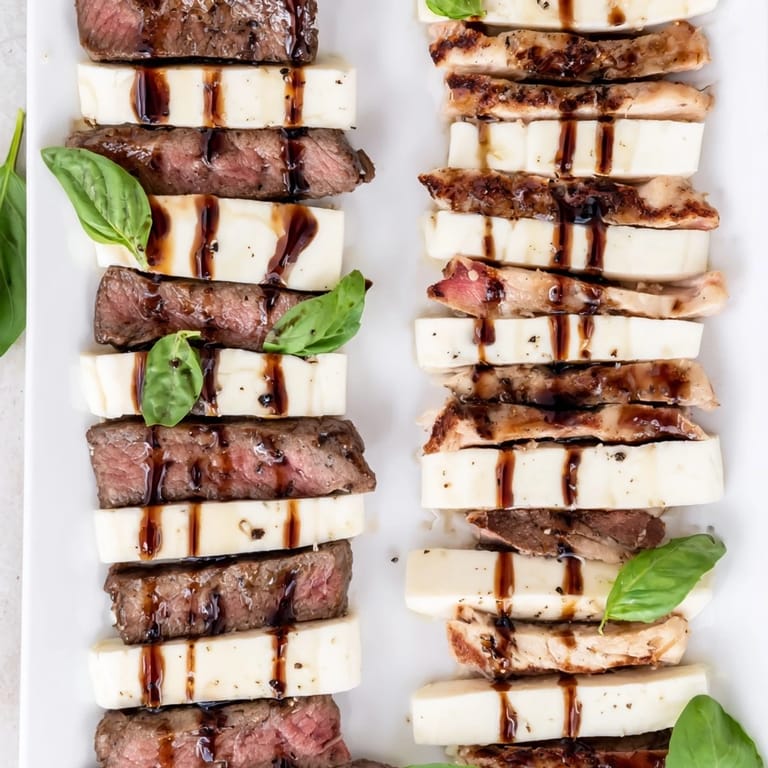
- While the meat cools just enough to handle, place your serving platter in front of you and start laying down your first row of mozzarella strips side by side. Follow with a row of beef, then feta, then chicken, and keep alternating until your platter is filled; the visual rhythm is what makes this sing.
- Add the glaze:
- Drizzle the cooled balsamic glaze generously over just the meat rows, letting it pool slightly and catch the light. The glaze pools on the cheese too, but it's the meat that should look glazed and glossy.
- Finish and serve:
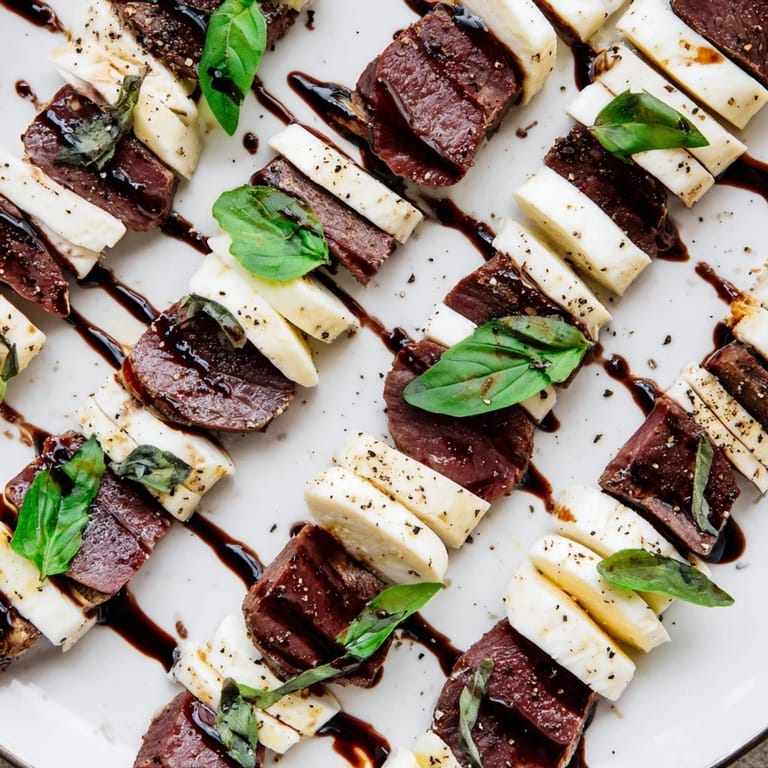
- Scatter torn basil leaves across the platter, give it one final grinding of black pepper, and place it on your table while everything is still warm from the sear and the mozzarella is still creamy.
 Pin this
 I served this at my sister's engagement party, and watching her light up when she saw it on the table was worth every minute. Later she told me it was the detail that made her feel celebrated, not just fed.
Building Your Platter Like a Pro
The secret to making Safari Stripes look effortless is treating your platter as a canvas rather than just a place to pile food. I learned this after my first attempt looked scattered, so now I visualize the rows beforehand and leave just a tiny sliver of breathing room between each strip. This spacing catches shadows and makes the whole thing look intentional and composed, almost like you've been doing this for years.
Adapting for Your Crowd
One night a friend mentioned she was mostly vegetarian, so I improvised by roasting thin slices of portobello mushrooms with the same seasoning and glaze I'd use for the beef. They charred beautifully and picked up that same smoky richness, making the stripes just as striking. Since then, I keep that option in my back pocket for mixed groups, and honestly, the vegetarian version holds its own.
Wine Pairings and Serving Thoughts
This dish sits in that lovely middle ground where it pairs with almost anything, but a crisp Sauvignon Blanc lets the balsamic and cheese sing without competing, while a light Pinot Noir echoes the earthiness of the seared meat. I've learned to serve Safari Stripes at room temperature rather than cold because the flavors open up as it sits, and the cheese stays soft enough to actually taste like something rather than like a block.
- Assemble no more than 15 minutes before serving to keep everything looking fresh and defined.
- If your kitchen is warm, keep the cheese strips in a cool spot until the last moment so they don't wilt.
- Leftovers taste wonderful the next day if you store them properly, though the visual impact is admittedly gone.
 Pin this
 Safari Stripes taught me that sometimes the most impressive dishes are the ones that look like you've put in more effort than you actually have. Serve it with confidence, and let the stripes do the talking.
Frequently Asked Recipe Questions
- → What cheeses best suit the safari stripes?
Fresh mozzarella and feta provide contrasting textures and flavors, balancing creaminess with tangy saltiness.
- → How is the balsamic glaze prepared?
Simmer balsamic vinegar with honey until it thickens into a syrupy consistency, then cool before drizzling.
- → Can I substitute the meats in this dish?
Yes, prosciutto or smoked turkey offer alternative flavors; for vegetarian options, grilled eggplant or mushrooms work well.
- → What is the best way to arrange the platter?
Alternate strips of cheese and cooked meats in neat rows to create a visually appealing striped pattern.
- → Which wines pair nicely with these flavors?
A crisp Sauvignon Blanc or a light Pinot Noir complements the richness of the cheeses and balsamic glaze.